


A resilient automation interface should show what is known, how old it is, what the system has accepted and what still needs human verification
By Marcelo Cedeño, Founder of MDX
Automation dashboards are usually demonstrated under ideal conditions: devices answer immediately, telemetry is current and every command completes in sequence. Real facilities are less orderly. A gateway may be reachable while one controller is not. A cloud service may accept a command that has not reached the device. A sensor value may still be visible even though it is minutes old. When the interface compresses all of these conditions into a single green or red connection badge, it asks operators to infer too much from too little.
Partial connectivity is not only a networking problem. It is an operational state that the interface must explain. The design goal is not to eliminate uncertainty—no interface can—but to make uncertainty visible, bounded and actionable.
Replace “online/offline” with an operational state model
A binary status is useful for a cable, but rarely sufficient for a system. A practical state model can distinguish at least five conditions: healthy, delayed, stale, offline and recovering. Healthy means updates are arriving inside the expected interval. Delayed means they are late but still inside a defined tolerance. Stale means the last value is visible but should not be treated as current. Offline means the system has no usable communication path. Recovering means communication has returned, but queued actions and conflicting state have not yet been reconciled.
These states must be defined against the process, not a universal timer. Five seconds may be irrelevant for monthly energy reporting and unacceptable for motion control. Product, controls and operations teams should agree on freshness thresholds for each class of data and document the operator action associated with every state.
The interface should then communicate state through several channels: a concise label, the age of the latest reading, restrained colour, and a clear consequence. “Temperature 72 °C — last updated 18 minutes ago” is more useful than a faded number beside a red dot. Colour should reinforce the message, not carry it alone.
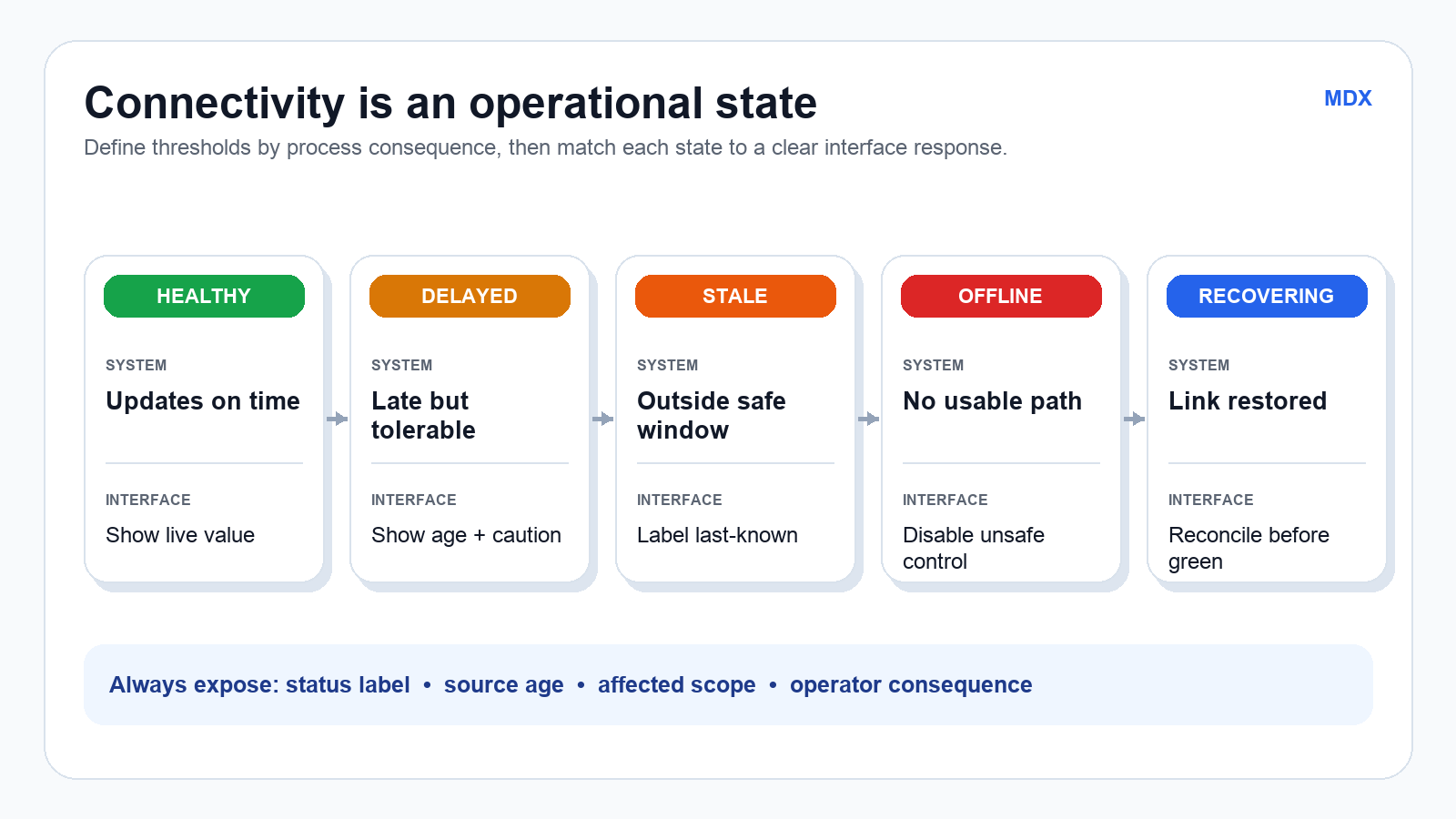
Figure 1 — Connectivity states and the interface response expected at each stage.
Show data quality and authority, not only the value
Every important reading needs context. At minimum, an operator should be able to tell when the value was produced, whether it is good, uncertain or bad, and which system supplied it. OPC UA formalises this separation with a value, status code, source timestamp and server timestamp. The interface does not need to expose protocol terminology, but it should preserve the meaning.
Display the source time when it affects a decision. Distinguish “last measured” from “last received”, especially when data passes through gateways or cloud services. Do not silently replace a failed reading with zero, because zero can be a valid and dangerous value. If a fallback estimate or last-known value is shown, label it explicitly and explain its age.
Authority also matters when local and cloud systems disagree. A digital twin, cache or database is not automatically the current physical truth. The UI should identify whether a field represents device state, desired state or last-known state. That vocabulary prevents a familiar failure: an operator sees the desired setpoint, assumes the device has applied it and takes the next action too early.
Treat every command as a lifecycle
A click is not a completed operation. A command can be drafted, submitted, accepted by an API or broker, delivered to a gateway, acknowledged by a device, executed and finally verified by telemetry. Each transition answers a different question. Collapsing them into a spinner followed by “Success” creates false confidence.
Use explicit states such as “Sending”, “Accepted”, “Awaiting device”, “Executed”, “Verified” and “Failed”. If acknowledgement is delayed, retain the command identifier and timestamp so the operator can investigate without sending duplicates. MQTT 5 supports reason codes on acknowledgements and message expiry; these are implementation details, but they illustrate the product requirement: the system should know why an action was rejected and when a queued instruction is no longer safe to execute.
Destructive or safety-relevant commands need stronger safeguards. Show the target, scope and current authority before confirmation. Use idempotency keys or equivalent controls so retries cannot repeat an operation unintentionally. For long-running actions, provide a cancel or rollback path only when the underlying system can honour it. An interface must never promise reversibility that the process does not possess.
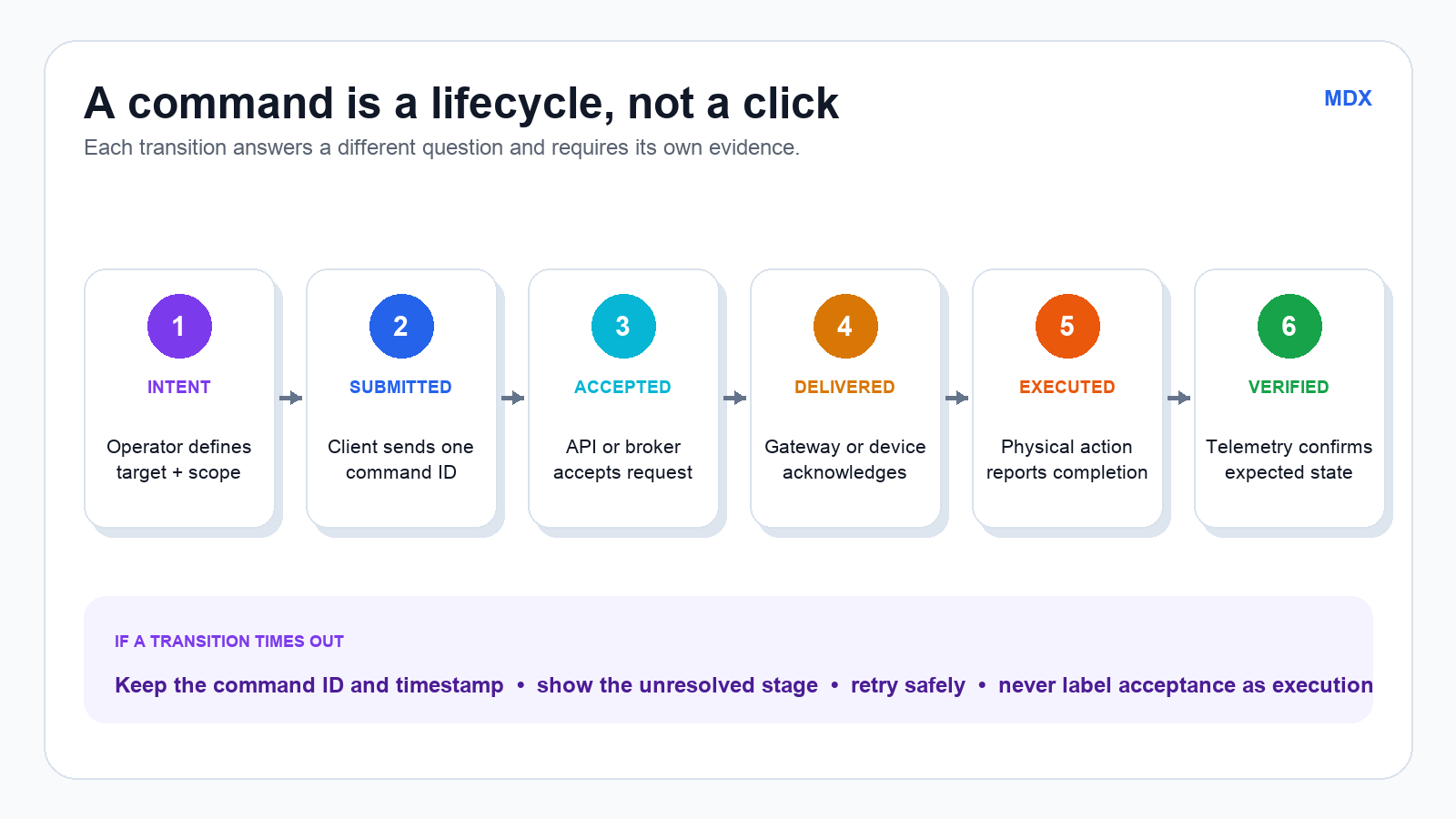
Figure 2 — A command is only complete after device execution is verified.
Make queuing and reconciliation visible
Offline-capable systems often queue changes, but the queue must not be invisible. Operators should see how many actions are pending, which assets they affect, when they will expire and whether execution order matters. A queued “start” followed by “stop” may be harmless, redundant or dangerous depending on the process. The platform should not assume it can compress the sequence without domain rules.
When communication returns, enter a recovery state rather than immediately declaring the system healthy. Compare desired state, last-known state and newly observed device state. Safe, non-conflicting updates may reconcile automatically. Conflicts, expired commands and actions whose preconditions have changed should require review. The operator needs a readable explanation: what changed, which source is authoritative, what the system proposes and what will happen after approval.
Maintain an audit trail across the interruption. It should connect the person or automation that initiated the action, the original intent, every acknowledgement, any retry, the reconciliation decision and the final verified result. This is essential for diagnosis and accountability, and it prevents the recovery screen from becoming a black box.
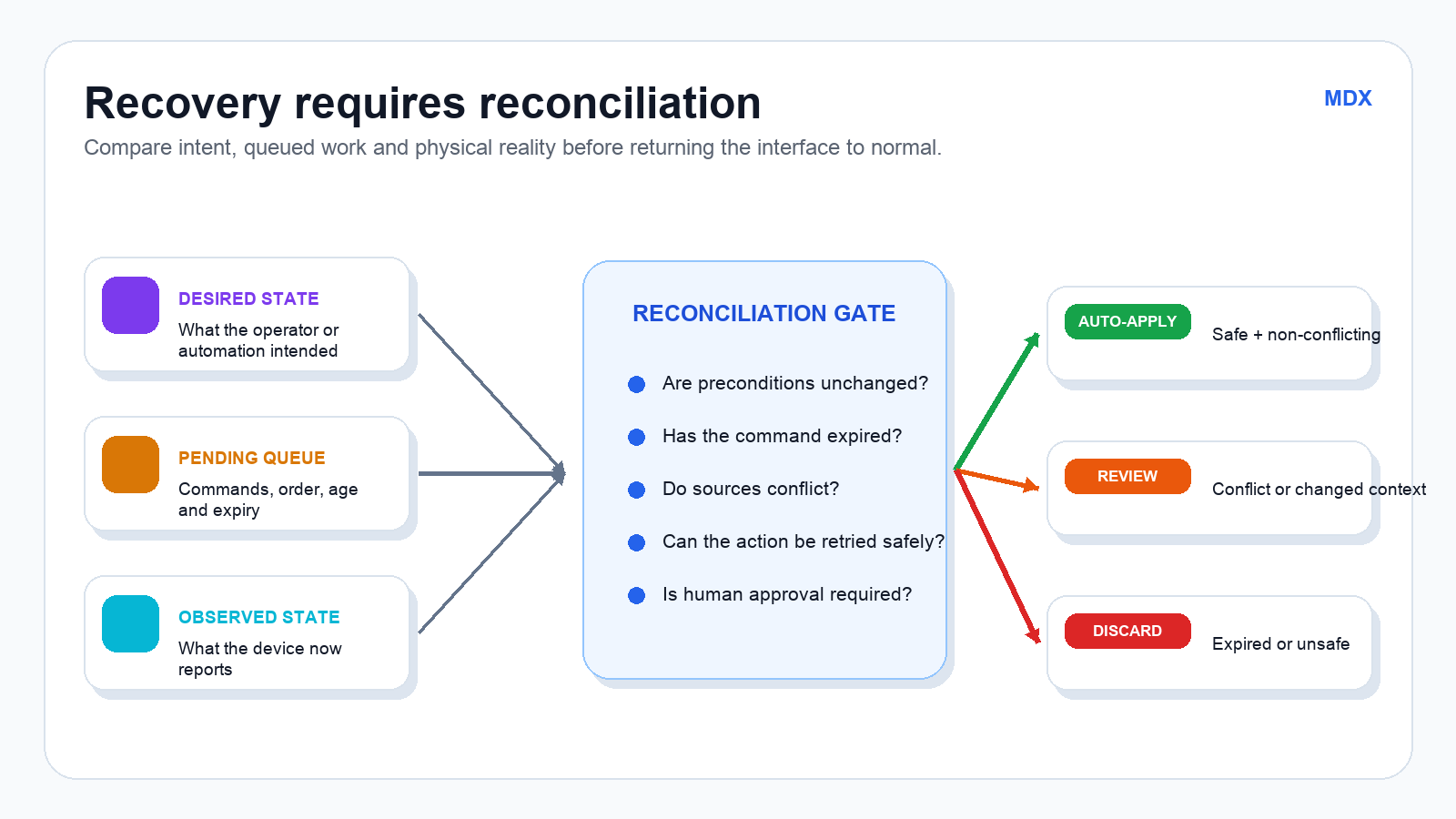
Figure 3 — Recovery compares desired, queued and observed state before normal operation resumes.
Preserve local control and permissions
Connectivity loss should not erase the operating model. Decide in advance which functions remain available locally, which become read-only and which require a higher level of authorisation. A cloud outage must not cause the interface to expose controls that the edge system cannot validate. Equally, a disconnected local panel should not appear to have revoked an operator merely because the identity service is unreachable.
Use cached permissions only within a documented time and scope, and record actions for later reconciliation. Make degraded-mode permissions visible to the operator. If an emergency manual path exists outside the application, the interface should state that clearly without implying that the software controls it.
Prioritise alerts by consequence and action
Loss of connectivity can generate an alarm storm: every child device appears unavailable, stale values cross thresholds and retries produce repeated failures. More alerts do not create more awareness. Group symptoms under the highest useful cause, suppress duplicates without hiding evidence and separate informational events from conditions that require intervention.
An actionable alert explains the affected scope, consequence, confidence and next step. ISA-18.2 treats alarm justification, priority, consequence and operator action as deliberate design work. Apply the same discipline to connectivity events. “Gateway 4 unavailable; 26 downstream readings are stale; local control remains available” is operationally stronger than 27 unrelated red banners.
Test the interface by breaking the sequence
Happy-path acceptance testing is not enough. Introduce latency, drop acknowledgements, duplicate messages, reorder events and reconnect components in unexpected sequences. Test clock drift, because a misleading timestamp can make fresh data appear stale or stale data appear current. Expire queued commands and change their preconditions before reconnection. Restart the interface while actions are pending and confirm that their state survives.
Run these scenarios with operators, not only developers. Ask what they believe is true, what they expect a control to do and which evidence they need before proceeding. Track ambiguous decisions as product defects. NIST guidance for operational technology emphasises that security controls must respect performance, reliability and safety requirements; resilience testing should do the same.
A launch review should therefore prove five things: every critical value exposes freshness and quality; every command has an observable lifecycle; queued work is bounded and reviewable; degraded permissions are intentional; and recovery cannot silently overwrite physical reality.
Partial connectivity is inevitable in distributed automation. Confusion is not. When the interface distinguishes observation from assumption and acceptance from execution, operators can make safer decisions even when the network cannot provide a perfect answer.
Author
Marcelo Cedeño is the founder of MDX, an award-winning digital product studio that designs and develops operational interfaces, applications and business automation systems. https://mdx.so
Technical references
-
OASIS, MQTT Version 5.0, Official OASIS specification
-
OPC Foundation, OPC UA Part 4: Services — DataValue, SourceTimestamp and StatusCode, Official OPC UA reference
-
NIST, SP 800-82 Rev. 3: Guide to Operational Technology Security, NIST publication
-
International Society of Automation, ANSI/ISA-18.2 Alarm Management, ISA18 standards committee